The Golan
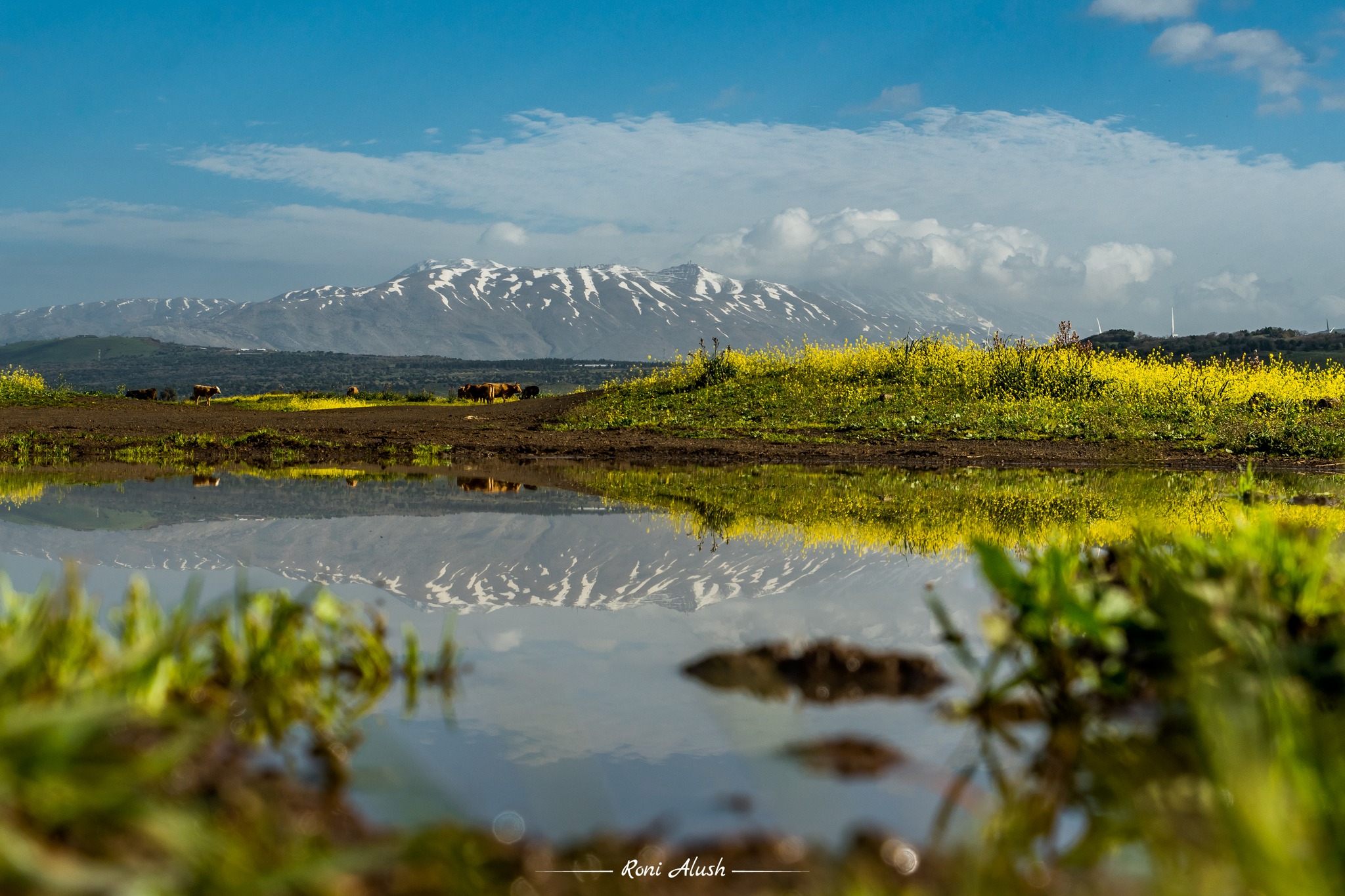
A settlement, agricultural, and tourism region spanning 1,100,000 dunams, from Hamat Gader in the south, 150 meters below sea level, to Mount Hermon in the north, at an elevation of 2,224 meters above sea level. The elevation difference creates a unique variety of landscapes, where wild nature blends together with a glorious Jewish history, whose impressive remains tell the story of the long-standing settlement in the Golan.
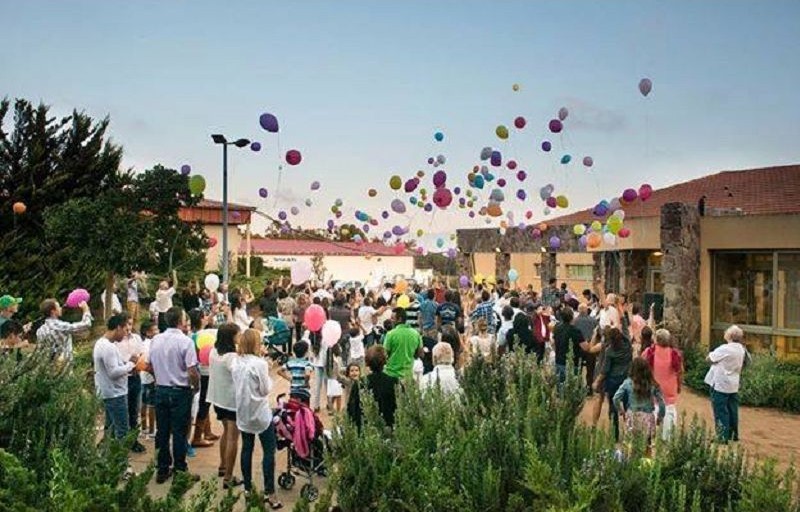
Over the years, the residents of the Golan established a successful settlement - 33 communities, advanced agriculture, flourishing tourism, and a cohesive community. Every year new families join the Golan community and choose to build their homes here and raise their children in the open spaces.
Jurisdiction Area: 1,100,000 dunams
Population: 22,000 residents (as of the end of 2025)
Location: From Mount Hermon in the north to Hamat Gader in the south, and from the armistice lines with Syria in the east to the Jordan Valley, the Sea of Galilee, and the Jordan River in the west.
Source of the Name: (Book of Deuteronomy 4:43) "and Golan in Bashan for the Manassites". Moses gave the city of refuge "Golan" in the Bashan region to the tribe of Manasseh. When the land was divided among the tribes, half
the tribe of Manasseh received the region as an inheritance.
Vision of the Golan
To be a unique region where a person can build their home and realize themselves in a diverse, quality-seeking, and welcoming community. A community that maintains a life founded on liberty, responsibility, initiative, social justice, connection to heritage, and love of humanity, the nation, and the land.
To create momentum in action, development, and the promotion of initiatives while preserving natural and landscape values, and creating an environment abundant in humanity, simplicity, and serenity for residents, travelers, and future generations.
Roots
The spiritual wealth of the Jewish community in the Golan throughout history, and especially during the Second Temple, Mishnaic, and Talmudic periods, is powerfully reflected in the variety of archaeological findings unearthed over the years, attesting to the existence of villages with established and flourishing Jewish communities.
About 30 ancient synagogues were discovered in the Golan, about a third of all synagogues in the country, among them the ancient synagogue of Ein Keshatot, which was destroyed in an earthquake in 749 CE, reconstructed from its original stones, and declared a national heritage site. In Gamla, the structure of the synagogue was uncovered, one of the earliest in Israel, along with a coin inscribed with "For the Redemption of Holy Jerusalem", attesting to the strong bond to Jerusalem.
Settlement and Absorption
With the liberation of the Golan in the Six-Day War in 1967, and in light of national consensus and recognition of its strategic importance, Jewish settlement was renewed, initiated by the Government of Israel with the mobilization of all settlement movements for the national mission.
The first of the settlements was Kibbutz Merom Golan, which settled on the land in August 1967, followed by settlements established in the northern and southern Golan by all settlement movements. At the end of the Yom Kippur War, the state began settling the central Golan, and in 1977, the town of Katzrin was established adjacent to the remains of ancient Katzrin, which was destroyed in an earthquake 1,300 years ago.
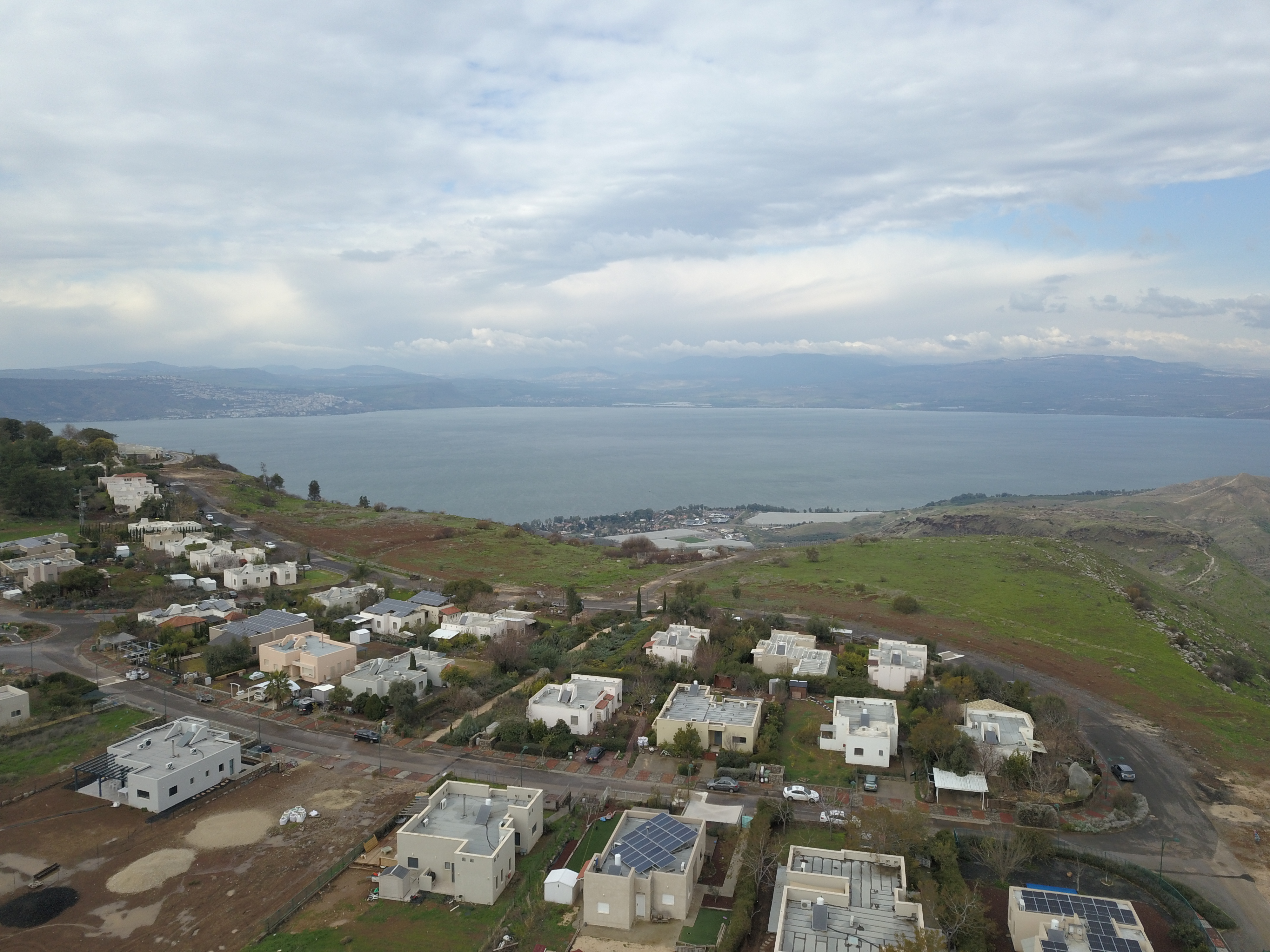
Currently, within the Golan Regional Council there are 33 settlements, including 18 moshavim, 9 kibbutzim, and 6 community settlements.
The Golan community grows every year with hundreds of new families experiencing quality of life, proximity to nature, and values-based education.
The broad range of options—moshavim, kibbutzim, community settlements—enables successful absorption for secular and religious, agricultural estates and community expansions.
Education
Education in the Golan is the driving engine of the community and a beacon for its growth. We educate a whole, rooted person with social responsibility based on a concept of an educational continuum from early childhood to adulthood, allowing every boy and girl to develop their abilities, realize their personal potential, and succeed anywhere.
Golan education shapes a deep Jewish-Israeli identity, connected to the Golan space, history, nature, and community, alongside developing broad, critical, and creative thinking. At its core lie human dignity, inclusion, protection, fostering interpersonal relations, and setting a high standard of personal and values-based excellence.
We are committed to building an excellent, diverse, and innovative Golan education system, operating in full partnership with all educational and community entities. We will invest in the professional and values-based empowerment of educational teams and strengthen meaningful educational leadership that will guide the next generation in the Golan with faith, responsibility, and passion for education.
Operating within the Council are: 28 daycare centers, 58 kindergartens, 6 special education kindergartens, 11 elementary schools, and 6 high schools, in which approximately 7,000 female and male students study.
Economic Development
Agriculture and rural tourism constitute the central livelihood branches of Golan residents. The Council established economic development as a strategic goal for the coming decade and is formulating strategic plans for the economic anchors selected to lead the region's economic development: innovative and knowledge-intensive agriculture, research and development, academia, tourism, advanced industry, and more.
Tourism
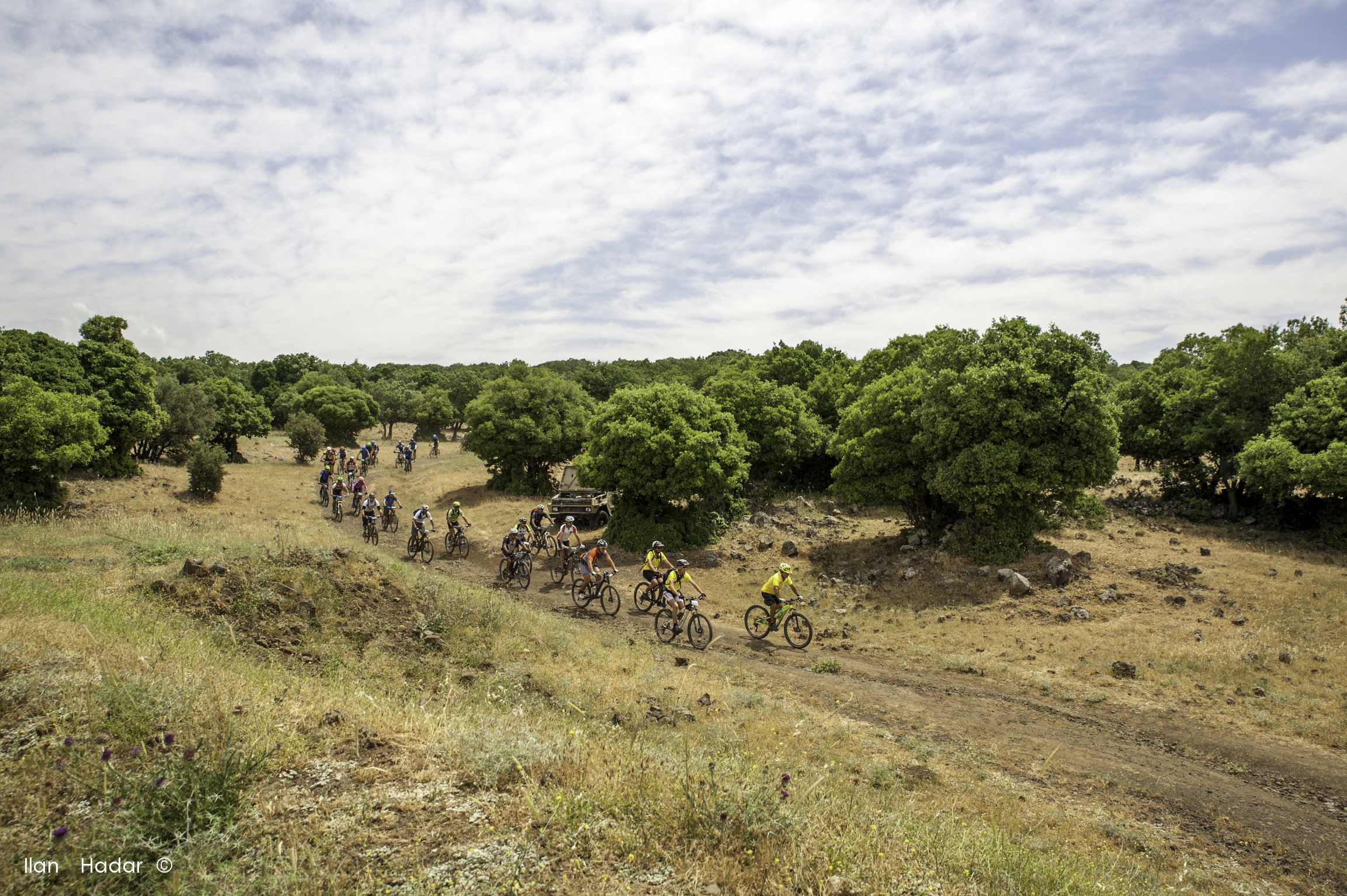
The Golan spans a vast area; across this enchanting region lie streams and springs, nature reserves and a rich world of flora and fauna, dormant volcanoes, basalt canyons, archaeological sites, and the shores of northeastern Sea of Galilee.
All these attract millions of travelers each year to the Golan, who enjoy attractions and activities such as: wineries and olive oil presses, horse ranches and jeep tours, self-picking fruit orchards, coffee carts and restaurants, spa treatments and art galleries, hiking trails, and observation points. Alongside a variety of accommodation options: hotels, pampering guest rooms, camping, and glamping sites.
In the Golan are some of the most visited tourist sites in Israel, including: Mount Hermon site, the shores of the Sea of Galilee, Jordan Park, Banias Reserve, Gamla Reserve, Golan streams: Yehudiya, Zavitan, Meshushim and more, ancient synagogues of Ein Keshatot and ancient Katzrin, Nimrod Fortress, and more...
To enrich the traveler's experience and provide added value to the visit, thematic content tourism was developed in various areas. Thus, the traveler gets to walk along paths of Jewish heritage stories in the Golan or the Eli Cohen Trail, to learn about stories of courage and love of the country on the Path of Valor through the multitude of memorials in the area, to become acquainted with open natural expanses along the numerous hiking trails and the Golan Trail, and to taste the agricultural produce.
Agriculture
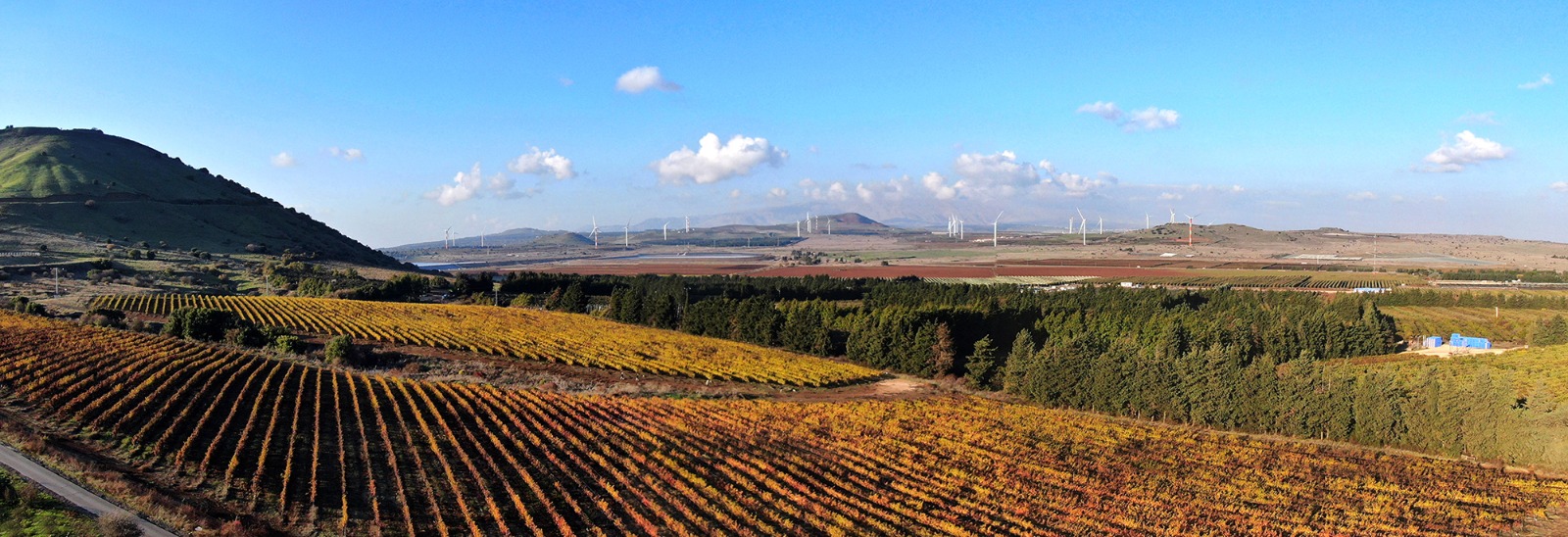
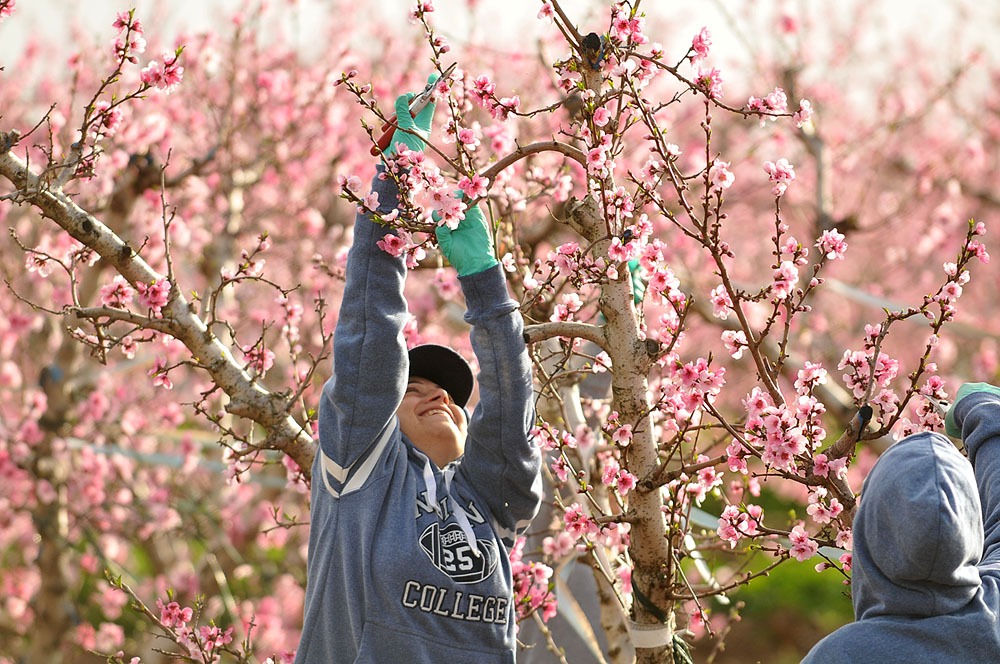
In the Golan are 27 agricultural settlements, constituting an agricultural powerhouse whose produce is in demand in Israel and worldwide. Elevation differences, climatic conditions, precipitation levels, and fertile basalt soil enable farmers to channel natural resources into impressive yields and a diverse range of crops.
Golan farmers ensure they adapt agriculture to the modern era, aided by applied research from the Shamir Research Institute and the Agriculture and Innovation Unit. Common crops include deciduous fruits, citrus, subtropical orchards, wine and olive vineyards, flowers, and field crops. High-quality wines are produced from Golan vineyards, having achieved success in global markets and winning awards in international competitions. In livestock, the Golan is characterized by dairy farming, beef cattle, broilers, turkeys, honey bees, and more.
Golan farmers grow about 30% of the national production of apples, cherries, pears, and mangoes. Meat production accounts for 30% of the national volume, and about 95 million liters of milk across one hundred dairy farms – 9% of the milk quantity in Israel.
Alongside traditional agriculture, knowledge-intensive and groundbreaking agriculture is developing, based on research and agro-genomics (genetics in service of agriculture) to create elite food and develop quality varieties and crops.
The Mei Golan Association, owned by the agricultural settlements, operates an extensive infrastructure network including dozens of reservoirs and conveyance lines throughout the Golan, used to supply irrigation water year-round.
Preserving Nature Values
Green Golan is one of the flags raised by the Council in the Golan Vision, centered on sustainable development and a moral commitment to preserving natural values and human heritage. From the Council's, settlements', and residents' perception of responsibility for preserving open spaces and nature in the Golan, a Master Plan for Open Spaces was formulated, mapping the value of the lands according to criteria that determined future development and conservation areas. The plan proposes guidelines and principles for the judicious use of land. Partnering in the plan's preparation are all stakeholders in developing or conserving the Golan landscape: tourism operators, farmers, residents, the IDF, the Ministry of Agriculture, the Nature and Parks Authority, the Settlement Division, KKL-JNF, and more.
The Council promotes environmental issues in recycling and waste separation, green energy development, educational-environmental activities, and comprehensive initiatives for treating domestic sewage, dairy farm sewage, tourism and industry effluents, and solutions for solid agricultural waste.